Eetbaar gebruik
Voedingswaarde
612 kcal/100g
Nuts, butternuts, dried
Bron: USDA FoodData Central
Teelt
Succeeds in most soils, including wet, ill-drained or intermittently flooded soils[1, 11], but prefers a damp, heavy soil in a sunny position[200]. Rarely thrives on chalk[200]. A relatively slow-growing but extremely durable plant when growing in very exposed positions[199]. Closely related to S. caprea[11]. Hybridizes freely with other members of this genus[200]. Although the flowers are produced in catkins early in the year, they are pollinated by bees and other insects rather than by the wind[11]. Plants in this genus are notably susceptible to honey fungus[200]. Dioecious. Male and female plants must be grown if seed is required.
Medicinaal
Plants For A Future can not take any responsibility for any adverse effects from the use of plants. Always seek advice from a professional before using a plant medicinally.
Anodyne Dysentery Febrifuge
The fresh bark of all members of this genus contains salicin[226], which probably decomposes into salicylic acid (closely related to aspirin) in the human body[213]. This is used as an anodyne and febrifuge[226]. The bark of this species is used interchangeably with S. alba. It is taken internally in the treatment of rheumatism, arthritis, gout, inflammatory stages of auto-immune diseases, diarrhoea, dysentery, feverish illnesses, neuralgia and headache[238]. The bark is removed during the summer and dried for later use[238]. The leaves are used internally in the treatment of minor feverish illnesses and colic[238]. The leaves can be harvested throughout the growing season and are used fresh or dried[238].
Overig gebruik & natuurwaarde
Pioneer Soil stabilization
Landscape Uses: Border, Massing, Specimen. Plants have an extensive root system and are used to stabilize waste tips and old slag heaps[199]. The seeds are very light and so can travel some distance in the wind. The plant is therefore able to find its way to areas such as cleared woodland where the soil has been disturbed. Seedlings will grow away quickly, even in exposed conditions and the plant will provide good shelter for the establishment of woodland plants. Thus it makes a good pioneer species and, except in wetter and moorland-type soils, will eventually be largely out-competed by the other woodland trees. Its main disadvantage as a pioneer plant is that it has an extensive root system and is quite a greedy plant, thus it will not help as much in enriching the soil for the other woodland plants as other pioneer species such as the alders, Alnus species[K]. Special Features: Not North American native, Wetlands plant, Attractive flowers or blooms. Dynamic accumulator.
Dynamic accumulator
Kenmerken & vermeerdering
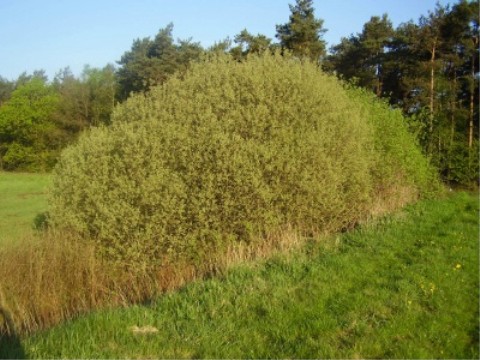
Salix cinerea is a deciduous Shrub growing to 5 m (16ft 5in).
See above for USDA hardiness. It is hardy to UK zone 2 and is not frost tender. It is in flower from March to April, and the seeds ripen from May to June. The species is dioecious (individual flowers are either male or female, but only one sex is to be found on any one plant so both male and female plants must be grown if seed is required). and is pollinated by Bees. The plant is not self-fertile.
Suitable for: light (sandy), medium (loamy) and heavy (clay) soils and can grow in heavy clay soil. Suitable pH: mildly acid and neutral soils. It cannot grow in the shade. It prefers moist or wet soil. The plant can tolerates strong winds but not maritime exposure.
Seed - must be surface sown as soon as it is ripe in late spring. It has a very short viability, perhaps as little as a few days. Cuttings of mature wood of the current year's growth, November to February in a sheltered outdoor bed or planted straight into their permanent position and given a good weed-suppressing mulch. Plant into their permanent positions in the autumn. Cuttings of half-ripe wood, June to August in a frame.
Habitat
Woodland Garden Sunny Edge; Dappled Shade;